
Medical Device UI Localization Services for Global Market Approval
Modern medical devices rely heavily on software-driven user interfaces (UI). As manufacturers expand into global markets, regulatory authorities increasingly require that user interface content, on-screen messages, and software prompts be accurately translated and culturally adapted to support safe device operation and regulatory compliance.
User interface localization plays a critical role in ensuring consistency between device software, Instructions for Use (IFUs), training materials, and supporting regulatory documentation. Poorly localized UI elements can lead to usability issues, regulatory delays, and increased risk of user error.
GTS supports medical device manufacturers by providing specialized medical device translation services, helping clients meet international language requirements while maintaining consistency, accuracy and regulatory readiness.
Why User Interface Design and Localization Are Critical for Medical Device Safety
Medical devices are used across a wide range of environments, including hospitals, outpatient clinics, and patient homes. Today, most medical devices rely on embedded or connected software that operates through a User Interface (UI). This interface may take many forms, such as desktop or mobile software applications, touchscreen displays, or dedicated hardware consoles with digital readouts.
Regardless of format, medical device user interfaces must be designed and localized to ensure safe, intuitive, and reliable operation by healthcare professionals and patients alike. Clear, culturally appropriate, and accurately translated UI elements are essential to support usability, reduce user error, and meet global regulatory and safety requirements.
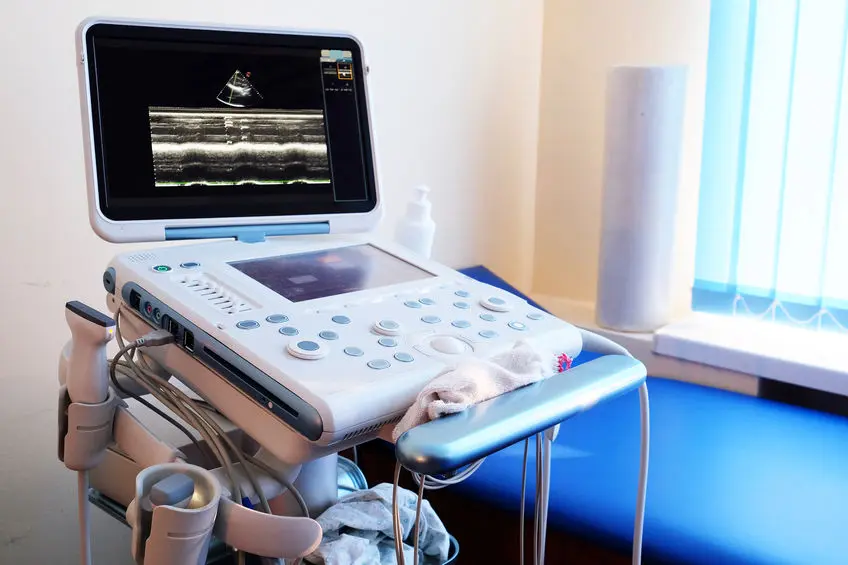
Medical Device UI Localization Workflow
If your company is marketing a medical device in foreign countries, you may be required to localize the UI into other languages. Translation of the medical device UI is usually more challenging than other related medical translation tasks, like translation of the medical device Instructions for Use (IFU). UI texts tend to be concise and usually include a lot of industry-specific acronyms. Without proper context, translators may have a hard time understanding the significance of certain UI strings. Here are some thoughts to consider when embarking on a medical device translation project.
- Submitting the UI strings: Identify the format of your UI resource files. Common formats include RESX, JSON, PO, MO, YAML, YML, XML, HTML, JavaScript, XLIFF, XLF and CSV. Coordinate the handoff with your translation partner.
- Understanding the context: communicate with your medical translation company and make sure that the project manager (or equivalent) has a good understanding of the medical device and its purposes. Make sure that the translation agency can understand what each string means and what it is meant to indicate to medical device operators. Otherwise, the result may be a poor translation.
- String length limitations: when translating text from one language to another, text can expand. Since the UI of some medical devices has a limited display capacity, this may cause problems when integrating the localized software. Convey any relevant length limitations to your translation team prior to the project launch. This will avoid costly delays and extra work hours of your R&D staff. If you are submitting XLS files to your translation team, you can limit the length of each text string in MS Excel. This is recommended, as it will eliminate any possibility of exceeding the length limits.
- Validating the localized UI: after you have localized the UI with the translated strings, submit screen shots of the localized software to your translators for validation. If possible, use licensed Medical Doctors or nurses for the validation.
- Save the screen shots. UI screen shots may also be used when translating the IFU, if screen shots appear in the manual. So save the localized screen shots and hand them over to the translation company when you translate other materials.
Best Practices for Preparing Medical Devices for Multilingual Regulatory Compliance
When regulatory authorities require translation of medical device documentation, including the IFU and UI, localization should begin with the UI. Translating and approving UI strings first helps ensure consistent terminology for software components, such as field names, commands, and menu options, across all device documentation.
Establishing approved UI terminology early also enables teams to generate finalized screenshots and interface references for inclusion in IFUs, user manuals, training materials, and supporting regulatory submissions. This structured localization workflow helps improve consistency, reduces revision cycles, and supports smoother global regulatory approval.
Get Price Quotes for Medical Device Localization
You can use this for to get instant prices quotes online for medical device localization services. Just select the languages and upload the files to get the price quote.
GET PRICE QUOTE FOR MEDICAL DEVICE TRANSLATION SERVICES